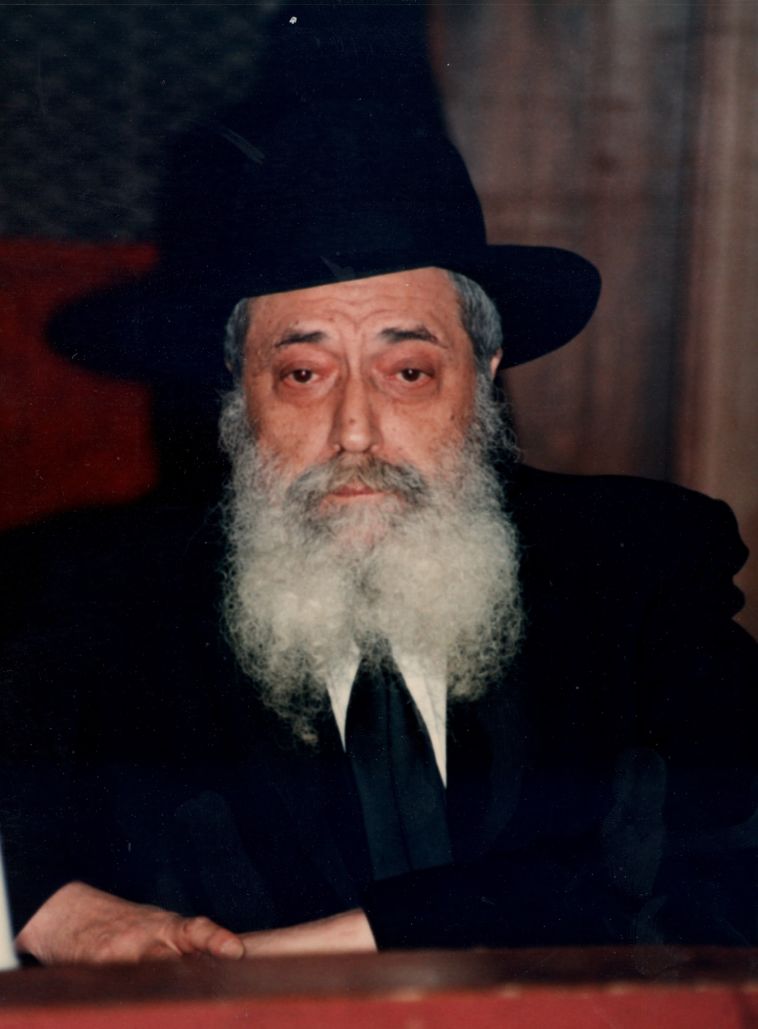
Mara d'asra and member of the Crown Heights Beis Din
Rabbi Yehuda Kalman Marlow and the Historical Practice in Crown Heights
Rabbi Yehuda Kalman Marlow became one of the central Rabbonim of Crown Heights after the passing of Rabbi Zalman Shimon Dworkin. In elections held less than a year later, Crown Heights residents selected Rabbi Marlow, Rabbi Avrohom Osdoba, and Rabbi Yosef Heller. Rabbi Marlow was selected as the mara d'asra of the community. For years beforehand, he had served as a member of the Bais Din Rabbonei Lubavitch headed by Rabbi Dworkin.
His place in the chain of local rabbonus is therefore clear. The eruv record connected to his tenure, however, has to be described with equal care. Unlike Rabbi Dworkin before him and Rabbi Aharon Yaakov Schwei later, no signed eruv ruling by Rabbi Marlow is presently available.
Rabbi Marlow's office and the eruv record
No signed eruv psak by Rabbi Marlow has been found among the available Crown Heights eruv documents. Nor is there a verified recording or transcript in which he gives a ruling on a Crown Heights eruv. There is therefore no sound basis for placing a particular eruv quotation in his mouth or presenting a later unsigned statement as though it were his own written psak.
This distinction is especially important because the documentary position is different for the Rabbonim immediately before and after him. Rabbi Dworkin's printed name appears on collective anti-eruv proclamations, and later Crown Heights Rabbonim explicitly attributed a Kislev 5739 ruling to him. Rabbi Schwei left a signed 2 Iyar 5776 notice that expressly prohibited carrying in the streets of the neighborhood. A comparable signed eruv document by Rabbi Marlow has not been located.
That does not prove that Rabbi Marlow never discussed an eruv or never expressed a view on the subject. It means that a specific ruling cannot responsibly be quoted in his name without a source that preserves it.
The historical practice is documented separately
The absence of a personal Marlow document is not the same question as the historical practice of Crown Heights.
The local Beis Din's visitor instructions for Tishrei 5776, issued in 2015 before the public eruv dispute of the following year, stated plainly:
“Here in the neighborhood there is no eruv, and it is forbidden to carry on Shabbos and Yom Kippur.”
That is direct evidence of the practical position being taught by the Crown Heights Beis Din at that time. It is an institutional notice from 2015, not a document authored or signed by Rabbi Marlow, who had passed away years earlier. It establishes the local practice immediately before the 2016 controversy without retroactively turning that practice into a quotation from him.
The available historical record likewise does not show a Beis Din-approved Crown Heights neighborhood eruv operating under Rabbi Marlow's authority. That absence is relevant when describing the practice of the community during his years as mara d'asra. It is still not a substitute for a personal psak whose wording has not survived.
What can be said about Rabbi Marlow
Rabbi Marlow belongs in the Crown Heights eruv history because he served as the community's mara d'asra in the period between Rabbi Dworkin and the later Beis Din rulings that survive in signed form. His office and authority are well attested, and the practical history of Crown Heights as a community without an accepted Beis Din eruv is a separate part of the record.
What is not presently documented is narrower but important: a signed Rabbi Marlow letter or a verified recording in which he rules on the Crown Heights eruv question. Preserving that distinction does not diminish his role. It prevents later practice or later rulings from being presented as Rabbi Marlow's own words without a verifiable source.