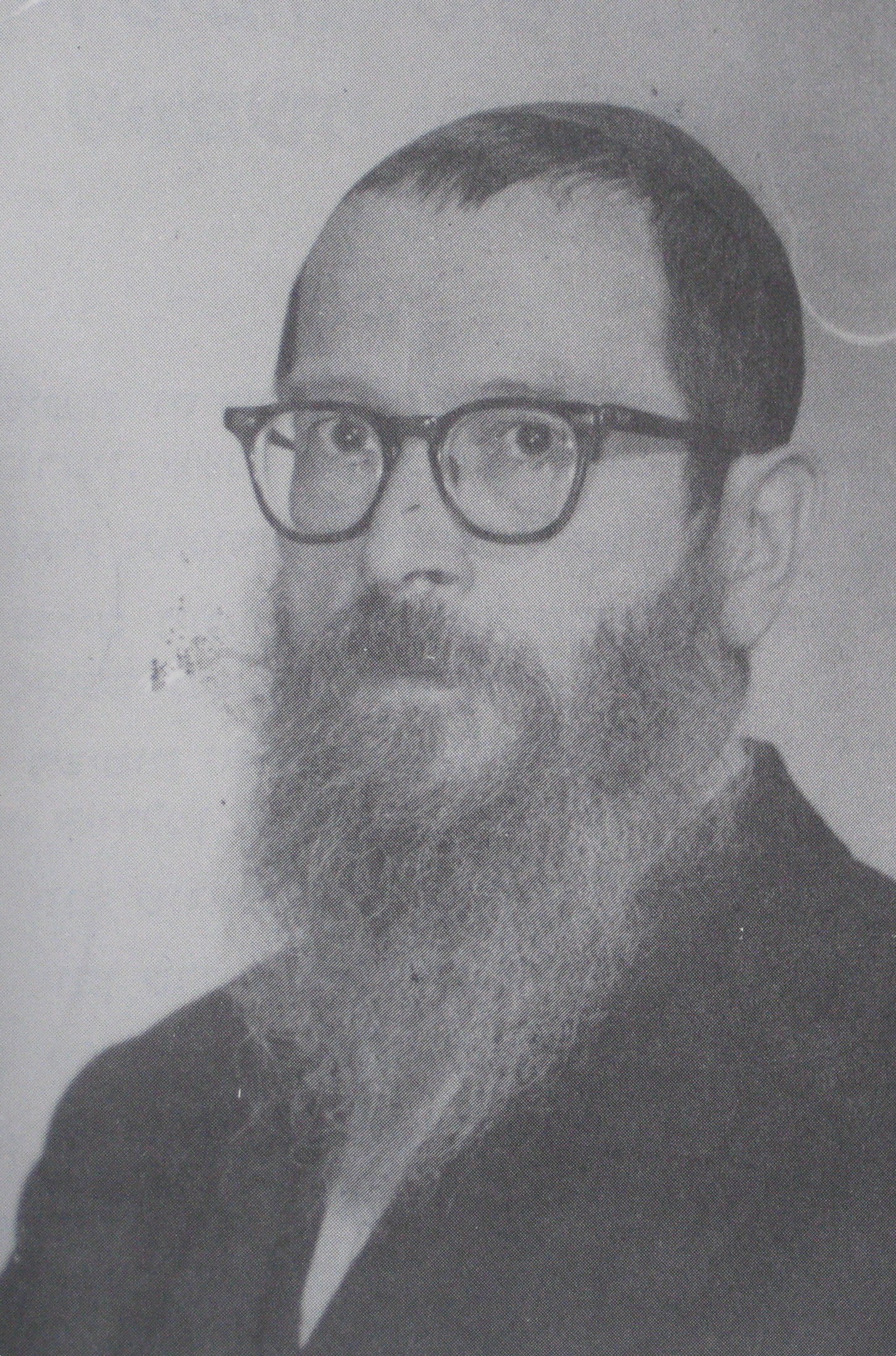
Mara d'asra of Crown Heights
Rabbi Zalman Shimon Dworkin and the Eruv Question in Crown Heights
Rabbi Zalman Shimon Dworkin served as Rav and mara d'asra of Crown Heights. A Kislev 5739 collective proclamation identifies him in its printed name block as Av Beis Din of Lubavitch. His place in the eruv discussion is significant, but the surviving documents are not all of the same kind. There are collective proclamations on which his name is printed, later Crown Heights Rabbonim who explicitly describe his ruling, and a report of a separate letter on his own stationery that has not been made available for examination. Those three forms of evidence should not be collapsed into one.
Rabbi Dworkin in the Kislev 5739 proclamation
A Union of Orthodox Rabbis proclamation from Kislev 5739, late 1978, restated the prohibition that had been issued concerning a Manhattan eruv and then made a broader declaration about large cities:
“It is self-understood that the above prohibition includes every large city, and there is no distinction between Manhattan and another city.”
The proclamation then warned against establishing an eruv in a city contrary to the position of the leading poskim whose ruling it invoked. Rabbi Dworkin's name appears in the printed list at the bottom as זלמן שמעון דווארקין, with the title אב״ד ליובאוויטש, Av Beis Din of Lubavitch.
That description matters, and so does the physical character of the page. The copy that survives publicly is a reproduced, typeset proclamation. Rabbi Dworkin's name is printed on it. There is no visible handwritten signature by Rabbi Dworkin on the reproduced page. It is therefore accurate to say that the proclamation includes his printed name among the Rabbonim presented as issuing the warning. It is not accurate to describe the reproduction itself as a page bearing his autograph signature.
A longer notice from the Brooklyn eruv dispute, reproduced in later publications and carrying seventy-three printed rabbinic names, also includes Rabbi Dworkin. Here too, the names on the surviving newspaper reproduction are printed names, not a surviving sheet of autograph signatures. The precise original newspaper issue and page have not yet been established securely, so that notice should not be treated as stronger evidence than the surviving reproduction allows.
How the later Crown Heights Rabbonim described his psak
There is also a specifically Crown Heights attribution to Rabbi Dworkin from later Rabbonim of the neighborhood.
In Sivan 5776, Rabbi Avrohom Osdoba and Rabbi Shlomo Yehuda Halevi Segal issued a signed notice stating that Crown Heights had no kosher eruv and that carrying was forbidden. In explaining the earlier local position, they wrote:
“This matter has already been ruled by the Rov and mara d'asra of Crown Heights, Harav Zalman Shimon Dvorkin, in a clear psak from Kislev 5739, along with other poskim of America and Canada, prominent among them Harav Moshe Feinstein, that it is forbidden and not possible to set up an eruv in this city according to halacha.”
This is important evidence about how later Crown Heights Rabbonim understood Rabbi Dworkin's position. It is also important to describe it exactly for what it is. The Sivan 5776 notice is signed by Rabbi Osdoba and Rabbi Segal. Rabbi Dworkin is the earlier Rav whose psak they identify and characterize. His name in their text is not his signature on that 2016 notice.
The Crown Heights Beis Din returned to the same historical point on Erev Sukkos 5782. In a notice visibly signed by Rabbi Osdoba and Rabbi Yosef Yeshaya Braun, the Rabbonim wrote that the position of the local Rabbonim and Beis Din had already been publicized, including Rabbi Aharon Yaakov Schwei, and that even earlier Rabbi Dworkin's position had been one of שלילה מוחלטת, absolute rejection, of the proposed Crown Heights eruv. Once again, this is a later official statement concerning Rabbi Dworkin's position, not a newly produced Dworkin manuscript.
Together, these later local statements add a specifically Crown Heights layer to the collective 5739 record. They preserve how the neighborhood's later Rabbonim understood Rabbi Dworkin's psak, while the surviving 5739 item remains a collective reproduced proclamation rather than a recovered personal letter.
The reported separate letter on Rabbi Dworkin's stationery
A separate document has been reported, but it is not presently available for quotation or authentication.
In September 2021, a public commenter wrote that Rabbi Yosef Heller had told him that he possessed a letter from Rabbi Dworkin on Rabbi Dworkin's own stationery concerning the eruv, in addition to the collective proclamation, and that Rabbi Heller was willing to share it. No scan, photograph, transcription, date, addressee, signature, envelope, or other identifying details of that reported letter have been produced with the report.
That leaves a clear line between what can and cannot presently be stated. It can be stated that a named person publicly reported that Rabbi Heller said he possessed such a letter. It cannot presently be quoted as Rabbi Dworkin's letter, dated, described as signed, or used to establish wording that has not been seen.
What Rabbi Dworkin's record establishes
Rabbi Dworkin's connection to the eruv issue does not rest on one undocumented assertion. His printed name and title appear on the Kislev 5739 large-city proclamation. His printed name appears again on the later reproduced Brooklyn notice. More importantly for Crown Heights itself, later Rabbonim of the neighborhood explicitly identified him as the earlier mara d'asra and described his Kislev 5739 psak as ruling that a kosher eruv could not be established in the city. The later Beis Din again described his position as one of absolute rejection.
The missing standalone letter may eventually add a more direct personal document to that record. Until the letter itself is available, however, the sound distinction is simple: collective printed participation is one thing, later local attribution is another, and a reported private letter is a third. Rabbi Dworkin's page should preserve all three without turning any one of them into evidence of a different kind.